Property
Water leaks: how to document them with photos and video
A stain that appears, spreads, dries out. How to build a photographic timeline of a water leak, with dates that can be verified.
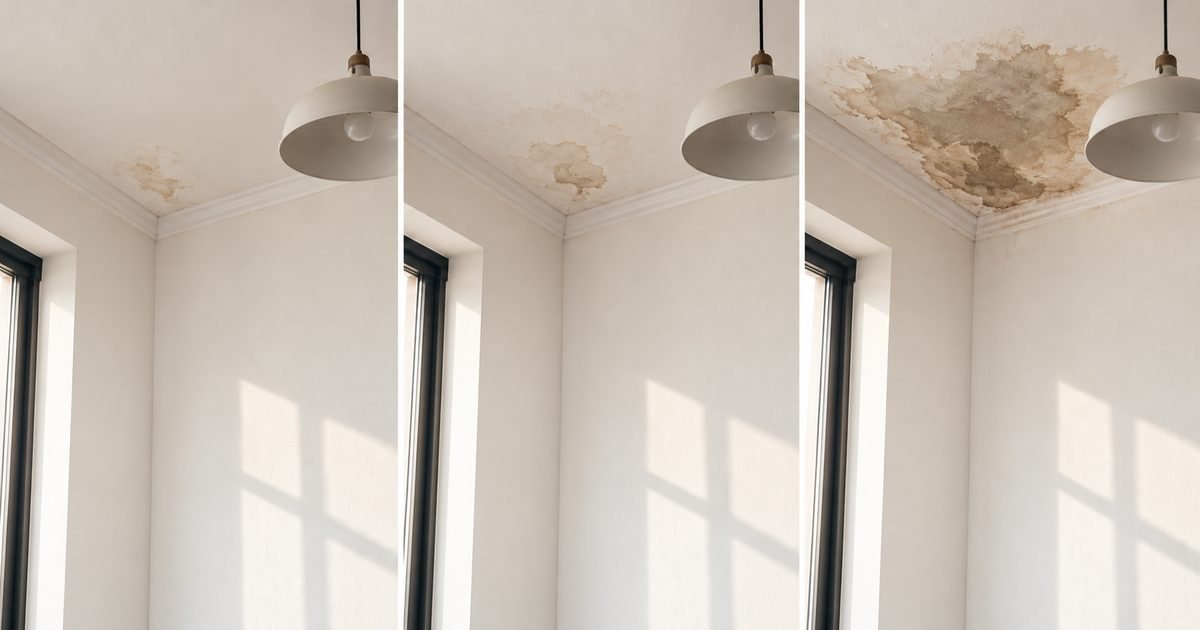
A damp patch can change considerably over time: it appears, spreads, dries out, comes back. When it comes to arguing about who should pay, the key question is almost always the same: how long has it been there, and how has it changed? A series of dated photos helps document those changes.
Why a leak is hard to prove
Water damage can be difficult to document: it often becomes visible only some time after it starts, and it changes with the weather. After rain the stain is obvious; after ten dry days it has nearly gone. Establishing responsibility may also require an inspection: the water could be coming from a neighbouring flat, a common part of the building or defective roof work.
Whoever is asked to pay tends to argue that the damage is old, that it was neglected, or that it got worse because the person affected did nothing. Against each of these arguments you need the same thing: a timeline.
The method: same spot, different dates
- Pick a fixed spot to photograph the stain from (the doorway, the corner of the table) and always go back there. Include something in the frame that does not change: the corner of the wall, the light fitting.
- Photograph at regular intervals and after every spell of rain: the way the stain changes with the weather is itself a clue to the cause.
- Measure: a tape measure next to the stain, or the reading of a contact moisture meter in the frame, if you have one. A documented measurement is worth more than an adjective.
- Follow the water: photograph what is above or next to it, if you can lawfully get to it: the terrace, the gutter, the neighbour's bathroom with their consent.
- A video that starts in the room and ends at the stain shows where it is in relation to the rest of the building.
The problem with dates
A timeline is only as strong as its weakest date. If the photos come from the phone's gallery, the date is the one written by the phone, and it is easy to change (see the guide on EXIF metadata). If the other side claims the first photos were backdated, being able to prove their date becomes essential to keeping the sequence intact.
With LOCUS every photo in the series receives, at the moment of capture, a timestamp from an independent authority (including a qualified eIDAS timestamp from InfoCert), together with the file fingerprint, the device signature and the location. In the EU, under Article 41(2) of Regulation (EU) No 910/2014, a qualified electronic timestamp enjoys a presumption of the accuracy of the date and time it indicates and of the integrity of the data to which they are bound. If you enter the same reference (the address, the claim number) in each capture, you can find the series in the app's library in seconds and gather it into a case file to hand over.
If you manage the building
When the leak affects common parts of the building, the property manager often has to document the damage for the buildings insurance, for the owners' meeting and for the contractor. Use the same approach: a fixed spot and verifiable dates. Also take care not to film people or private spaces without consent. See LOCUS for property managers.
What LOCUS does not tell you
Sealed photos show what the stain looked like and when. They do not tell you where the water is coming from or who is liable: those questions need a qualified surveyor, who can work from your images knowing they are unaltered and dated. If there is a dispute, the court will weigh the photos alongside the rest of the evidence.
For the insurance claim, the guide on how to photograph damage for an insurance claim explains the four shots and what to do first.